Tokyo Godfathers: An Accidental Family
Family might be one of the most universal languages in our collective history. How it looks, how it is supposed to be, and what it feels like to be a part of one can look and feel different to each and every one of us depending on our experiences with it. But when “family” is used we seem to inherently know what it means and how it is supposed to function. There is an innate reaction to the concept that while having a variation, seems to carry with it a consistency and known quality. And it is for this very reason that familial drama in artistic creation can often feel homogenous, with little variation and uniqueness that set it apart from other works.

Satoshi Kon, the late and great master of surrealism, and his 2003 dark comedy adventure film “Tokyo Godfathers” is not cut from the same cloth as any of his other works. In its grounded quirkiness mixed with his signature art style and indistinguishable character design, delivers a work that doesn’t leave you dazed and confused with blurred lines and eventual collapse between reality and unreality, but a quiet holiday night punctuated by the shouts of a collection of individuals scouring the snow covered streets of Tokyo, searching for answers in their misadventures together.
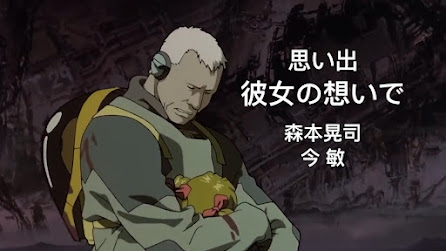
Three homeless people, Gin a middle aged alcoholic, Hana a transgender woman, and Miyuki a runaway teenager discover a baby bundle abandoned while searching through the garbage on Christmas eve night. Attached to the bundle is a note, asking that whoever finds the baby to take good care of her along with a locker key. They begin their search for the child’s parents. With child in tow named “Kiyoko” by ecstatic temporary mother Hana, after the Japanese title for the Christmas song “Silent Night” which translates to “pure child.”
The mood is set with the gentle falling of snow on the comparatively quieter streets of Tokyo on the holy night. Given an almost dreamlike, snow globe-esque quality. It feels soft as if to almost suggest to the viewer that there is every chance here that Kiyoko is safe, even in the hands of these seemingly “poorly adjusted failures of society” as some might view. As they bicker back and forth, taking swipes at each other, Keiichi Suzuki’s compositions, who himself composed the music for the 1989 and 1994 respectively, games “Mother” and “Mother 2,” cuts through that softness with a wackiness and incongruous bumbling, an echoing collection of muted horns, banjo, and clarinet, to level that sense of safety with an uncertainty and distrust that, maybe they would be better handing her off to the authorities.
Through their interactions we learn of their core traits and how they relate to each other enough to continue staying in each other presence. Hana’s overly-dramatic manner of speaking and reactions, while maintaining a desire to being a caring maternal presence not through altruism, but a selfish desire to be needed. Gin’s frosty exterior giving space to show him lash out at the others for their perceived stupidity, because he is afraid to lose the only people left in his life who have given him any acknowledgement at the end of the day.
At a key narrative moment when Miyuki and Hana are reunited with Gin, rather than apologies and grateful sobbing she lashes out with frustration and anger, not mad at him but expressing her fear for his life through the angry words. She cares deeply about him but that familial constance keeps her from wanting to show the vulnerability. You almost feel as if they let each other see their suffering that they will have to come to terms with their lives. The complexity is revealed through how they speak with each other and informed by an unsaid desire to keep this misfit family together at all costs and in how they react to the potentials of that loss along the way that feels earned and authentic to our real world.
Kon had an outstanding ability to know just when to give a character their moments, expressive facial animations for each one of them that cement them further in our minds as real people. Eyes narrowing in uncertainty, facial muscles contorting with rage, mouths bellowing out obscenities, and even with the volume turned down and/or the subtitles turned off you would be able to gain the temperature of a reaction or communication based solely alone on their outstanding animations. Keiko Nobumoto, who co-wrote the script with Kon, had such a knack for bringing the best out of unwilling participants in familial experiments and they bring their characters to life in such an organic harmony of animation and writing.
It is not just in how we are allowed to learn about the characters of Miyuki, Hana, and Gin but it is in how their backstories are told and when they are told that gives them a sense of organic, natural, real place within the narrative, along with who they give them to, and how that reinforces the familial dynamic of how their relationship functions. Miyuki’s comes to light when in a foreigner homeless camp to a woman who does not speak Japanese. The irony of feeling safer breaking down in tears explaining why at such a young age you are living on the streets with your elders with not only a complete stranger, but one that cannot even understand you, especially as a teenager. Hana herself in a drag bar she was let go from, noticing a picture on the wall from her past, remembering what it used to be like to have a mildly stable life with people who cared about her as she was without judgment.
They each feel unable to confide in each other because as a family, they fear letting themselves and their weakness be seen in front of the unit, choosing instead to constantly shift attention with snarky hostility should they ever get too close to being real with each other. None of them are ever lionized as virtuous or correct in how their past lives fell apart, but they are never punched down at for their choices and actions. Their choices are just that. Without explicit moral weight one way or the other, but plenty of consequences for their lives going forward.
Family can be found in an abundance of places. Not limited by blood, past, or ideology. It is a conscious collective of individuals that function as a unit. Sometimes united by an uneasy alliance of an unspoken love, but tried and tested just as much as any traditional definition of the word put into practice. More than a family of names and genetics we are a family of the humankind before any other title. And when we have the chance, opportunity, and the ability to look after and support one another, however that may look or function, typically or abnormally, with a genuine heart and desire for good, above or beneath the surface level of appearance, communication styles, age range, and gender identity, we always should feel duty bound to do so for our fellow humans just trying to make it through the snowy, cold, unforgiving, and unsafe evening streets of life.

Comments
Post a Comment